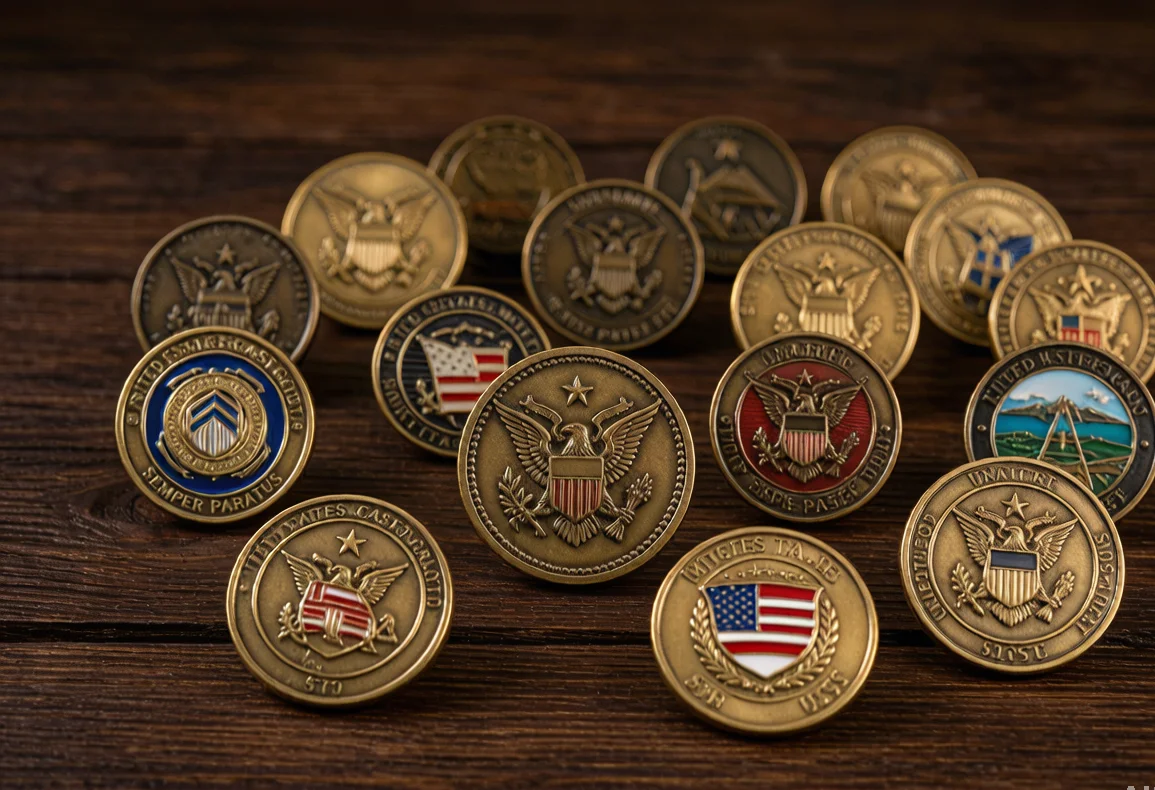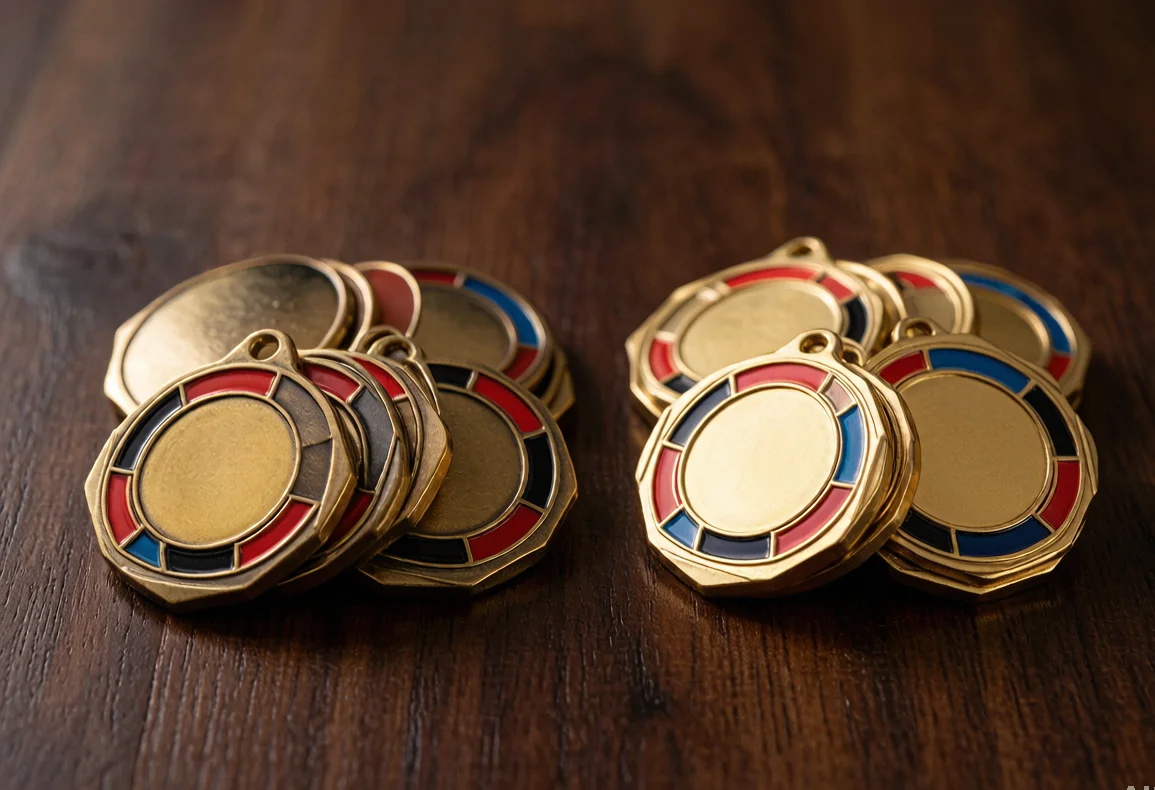
Every custom medal order begins with a single question that shapes everything that follows: what metal should it be made from? For the overwhelming majority of sports medals, corporate awards, and commemorative pieces, the answer comes down to two materials — brass and zinc alloy. Both can produce beautiful results. But they are fundamentally different metals, and choosing between them affects weight, cost, durability, plating quality, and the entire manufacturing timeline.
For procurement professionals, event organizers, and award coordinators, understanding these differences is not a technical curiosity. It is the difference between medals that feel substantial and ones that feel cheap, between awards that arrive on time and ones delayed by production issues, and between a budget that works and one that overruns.
This guide examines brass and zinc alloy side by side across every dimension that matters for custom medal procurement, so you can specify the right material with confidence.
Understanding the Materials
Brass
Brass is an alloy of copper and zinc, typically containing 60–70% copper and 30–40% zinc for medal-grade applications. It is a dense, heavy metal with a natural golden color that has made it the traditional choice for high-value awards and military decorations for centuries.
Brass medals are produced through die striking — a process where a solid brass blank is compressed between hardened steel dies under extreme pressure. This compresses and work-hardens the metal, creating sharp details and a smooth surface that takes plating exceptionally well.
The key characteristic of brass that matters for medals: it feels expensive. The weight alone communicates quality before anyone examines the design.
Zinc Alloy (Zamak)
Zinc alloy, specifically Zamak 3 or Zamak 5 in medal manufacturing, is primarily zinc with approximately 4% aluminum, 1% copper, and trace magnesium. The name Zamak comes from the German initials of its constituent metals: Zink, Aluminum, Magnesium, Kupfer.
Zinc alloy medals are produced through die casting — molten metal is injected into a steel mold under pressure. This process fills complex mold cavities completely, allowing for intricate 3D details, deep relief, and variable edge thicknesses that are difficult or impossible to achieve with die striking.
The key characteristic of zinc alloy: design flexibility. It can reproduce incredibly fine details and three-dimensional shapes at a cost that makes it accessible for orders of any size.
Side-by-Side Comparison
| Feature | Brass (Struck) | Zinc (Cast) |
|---|---|---|
| Weight (65mm medal) | 55–70g | 35–45g |
| Density | ~8.5 g/cm³ | ~6.6 g/cm³ |
| Natural color | Golden | Silver-grey |
| Manufacturing method | Die struck | Die cast |
| Detail capability | Excellent 2D | Excellent 2D and 3D |
| Mold cost | $200–$500 | $150–$350 |
| Unit cost (1,000 pcs) | 40–60% higher | Baseline |
| Plating adhesion | Excellent | Very good (with copper-nickel under-layer) |
| Perceived quality | Premium | Good to very good |
| Best for | Commander’s coins, premium awards, government pieces | Standard medals, participation awards, complex 3D designs |
Each of these differences deserves a closer look.
Weight and Perceived Quality
This is the single most noticeable difference between brass and zinc alloy medals, and the one that recipients feel immediately.
A standard 65mm (2.5-inch) sports medal in brass typically weighs between 55 and 70 grams. The same medal in zinc alloy weighs between 35 and 45 grams — approximately 35–40% less. That difference is immediately apparent when someone picks up the medal.
For placement medals — gold, silver, and bronze awarded to top finishers — the heavier weight of brass communicates prestige. An athlete who has trained for months will notice the difference between a medal that has genuine heft and one that feels lightweight. For this reason, brass is the material of choice for championship medals, commander’s coins, and any award where perceived value is a primary consideration.
For participation medals distributed in large quantities — marathon finisher medals, charity event medals, school sports day awards — zinc alloy provides entirely adequate weight. Recipients are not comparing medals side by side, and the cost savings translate directly to budget that can be allocated elsewhere in the event.
Detail and Design Complexity
The manufacturing process dictates what designers can achieve with each material.
Brass: Precision in Two Dimensions
Die striking excels at crisp, flat-surface detail. Fine text, intricate line work, and smooth polished backgrounds are rendered with exceptional clarity. Think of a traditional challenge coin with sharp lettering and a mirror-like background — that is die struck brass at its best.
The limitation is depth. Die striking compresses metal between two flat or gently contoured dies, so three-dimensional relief is limited. You can achieve raised and recessed areas, but they exist within a constrained depth range. Deep sculptural effects — a coin with a figure that appears to emerge from the surface — are not achievable through die striking alone.
Zinc Alloy: Freedom in Three Dimensions
Die casting injects liquid metal into every corner of a fully three-dimensional mold. This means medals with dramatic depth variation — a central emblem that stands proud against a recessed background, progressive elevation levels, variable edge thickness — are all possible with zinc alloy at no additional cost beyond the mold.
For medals with 3D sculpting, a figure or emblem that needs dimensional depth, or designs where the edge profile is part of the aesthetic, zinc alloy is the better choice. The mold cost is often lower, and the design freedom is greater.
Cost Analysis
The economics break down into mold cost and unit cost.
Mold Cost
| Mold Type | Brass (Struck) | Zinc (Cast) |
|---|---|---|
| Standard 2D design | $200–$400 | $150–$300 |
| Complex 3D design | $350–$500 (limited depth) | $200–$400 |
| Mold lifespan | 50,000–100,000 strikes | 30,000–80,000 shots |
Brass die striking molds are more expensive because the dies must withstand repeated high-pressure impacts. Zinc alloy die casting molds operate at lower pressures and higher temperatures, with a different wear profile that makes them somewhat less expensive to produce.
Unit Cost
For an order of 1,000 standard 65mm medals with 4–5 enamel colors and gold plating:
- Zinc alloy: $0.80–$2.50 per piece
- Brass: $1.50–$4.00 per piece
The brass premium is approximately 40–60% at the unit level. Over 1,000 pieces, that is a difference of $700–$1,500 — enough to cover the mold cost entirely, upgrade packaging, or add ribbon customization.
Break-Even Point
For very large orders (5,000+ pieces), the mold cost becomes negligible per unit and the unit price difference dominates. At 10,000 pieces, choosing zinc alloy over brass saves approximately $7,000–$15,000.
For small orders (100–300 pieces), the mold cost represents a larger portion of the total investment. The total cost difference between brass and zinc alloy is compressed, making brass more accessible at lower quantities.
Plating and Finish Quality
Both materials receive electroplating to achieve the desired finish — gold, silver, bronze, nickel, antique, or dual-tone. The difference is in how well each material accepts and retains plating.
Brass Plating
Brass has a natural affinity for electroplating. Its copper content creates excellent conductivity and chemical compatibility with gold, silver, and nickel plating solutions. Brass medals require only a single-step plating process for gold and silver finishes because the base material already has a warm, compatible color.
The result: plating on brass is exceptionally uniform and durable. Even if the plating wears at high-contact points over years of handling, the brass underneath has a natural golden color that does not look obviously worn or corroded. This is why antique brass medals develop a patina that collectors value rather than appearing damaged.
Zinc Alloy Plating
Zinc alloy requires a multi-step plating process. Because zinc is chemically reactive and does not bond well with precious metal plating solutions directly, a copper under-layer must be applied first, followed by a nickel barrier layer, and finally the desired finish plating.
When done correctly by an experienced manufacturer, zinc alloy plating is excellent — bright, even, and durable. But the multi-step process introduces additional quality control variables. Poor adhesion, uneven thickness, and premature wear are possible if the plating line is not properly maintained and monitored.
This is the area where manufacturer quality matters most. A reputable factory with modern electroplating equipment and rigorous QC will produce zinc alloy medals with near-brass plating quality. A lower-tier manufacturer may not.
Corrosion and Longevity
Brass naturally resists corrosion. Over years or decades, it develops a stable patina rather than deteriorating. Brass medals from decades ago remain presentable with minimal care. This makes brass the better choice for medals intended to last a lifetime — military decorations, lifetime achievement awards, and archival pieces.
Zinc alloy has good corrosion resistance when properly plated, but it is inherently more reactive than brass. If the plating is compromised — chipped, scratched through to the base metal — zinc alloy can show white corrosion (zinc oxide) over time. This is unlikely to be an issue within the normal lifespan of a sports medal (5–10 years), but it matters for awards intended for permanent display.
Manufacturing Timeline
| Stage | Brass | Zinc Alloy |
|---|---|---|
| Mold/Diemaking | 7–10 days | 5–7 days |
| Sample production | 3–5 days | 2–3 days |
| Mass production (1,000 pcs) | 12–15 days | 10–12 days |
| Plating | 1–2 days | 2–3 days (multi-layer) |
| Quality inspection | 1–2 days | 2–3 days |
| Total lead time | 24–34 days | 21–28 days |
Zinc alloy is consistently faster by approximately 5–7 days in total lead time. The simpler mold fabrication and faster casting cycle account for most of this advantage. For events with very tight deadlines, this difference can be decisive.
Which Material for Which Application?
| Application | Material | Reason |
|---|---|---|
| Championship medals (1st–3rd place) | Brass | Weight, prestige, perceived value |
| Commander’s coins / VIP awards | Brass | Heft, durability, tradition |
| Government commemorative medals | Brass | Longevity, archival quality |
| Participation medals (large quantity) | Zinc alloy | Cost efficiency at scale |
| Complex 3D sculpted designs | Zinc alloy | Mold flexibility, lower mold cost |
| Corporate recognition awards | Either | Brass for executive awards, zinc for team recognition |
| School / youth sports medals | Zinc alloy | Budget-friendly, adequate quality |
| Limited edition collector pieces | Brass | Perceived value, patina over time |
How to Specify Material Correctly
When requesting quotations from manufacturers, be specific about material. The following phrases in your inquiry will ensure clear communication:
- “Zinc alloy (Zamak 3) — die cast”
- “Brass — die struck”
- “Please quote both brass and zinc alloy options for the same design”
Requesting side-by-side quotations for the same design is the most effective way to understand the real cost difference for your specific project. It also signals to the manufacturer that you are an informed buyer comparing options rather than simply accepting the first recommendation.
Common Questions from Buyers
Can I tell the difference between brass and zinc alloy once the medal is plated?
In appearance alone, a well-plated zinc alloy medal can look nearly identical to a well-plated brass medal. The difference becomes apparent when you pick it up — brass is noticeably heavier. For medals that will be worn around the neck on a ribbon, the weight difference is immediately felt by the recipient.
Is zinc alloy less durable than brass?
Under normal conditions — displayed, stored, or occasionally worn — both materials are adequately durable. Brass has an edge for extreme longevity (decades) and performs better if the plating is ever compromised. For the typical lifespan of a sports or event medal, zinc alloy durability is perfectly sufficient when manufactured to quality standards.
Does brass always cost more?
Yes, brass always costs more than zinc alloy for the same design, typically 40–60% more at the unit level. The cost premium is primarily driven by higher raw material cost and the more labor-intensive die striking process. The mold cost is also somewhat higher for brass.
Can I mix materials within one order?
Yes. A common approach for multi-tier events is to use brass for the top placement medals (gold, silver, bronze) and zinc alloy for participation medals. The manufacturer can handle both materials within the same purchase order, though they are separate production runs.
What if I need the medal to be very heavy?
Specify brass and request an increased thickness — moving from 4mm to 6mm thickness adds approximately 30–40% more weight. For extreme weight requirements, some manufacturers offer iron-core medals (a brass or zinc exterior with an iron insert), though this is a specialized product not all factories can produce.
Does the enamel process differ between the two materials?
The soft enamel and hard enamel processes are the same for both materials. The color application, baking, and polishing steps are identical. The only difference is that zinc alloy medals with deep 3D contours may require more careful enamel application to ensure even fill levels across varying depths.
Supplier Questions to Ask
When evaluating manufacturers for brass or zinc alloy medals, these questions will help you assess their capability:
- “Do you have in-house electroplating, or is it outsourced?” — In-house plating means better quality control
- “Can you provide photos of your die striking and die casting equipment?”
- “What is your daily production capacity for brass versus zinc alloy?”
- “Can you send physical samples of both materials with the same plating finish for comparison?”
- “What under-layer process do you use for zinc alloy plating?” — The answer should include copper strike and nickel barrier layers
Conclusion
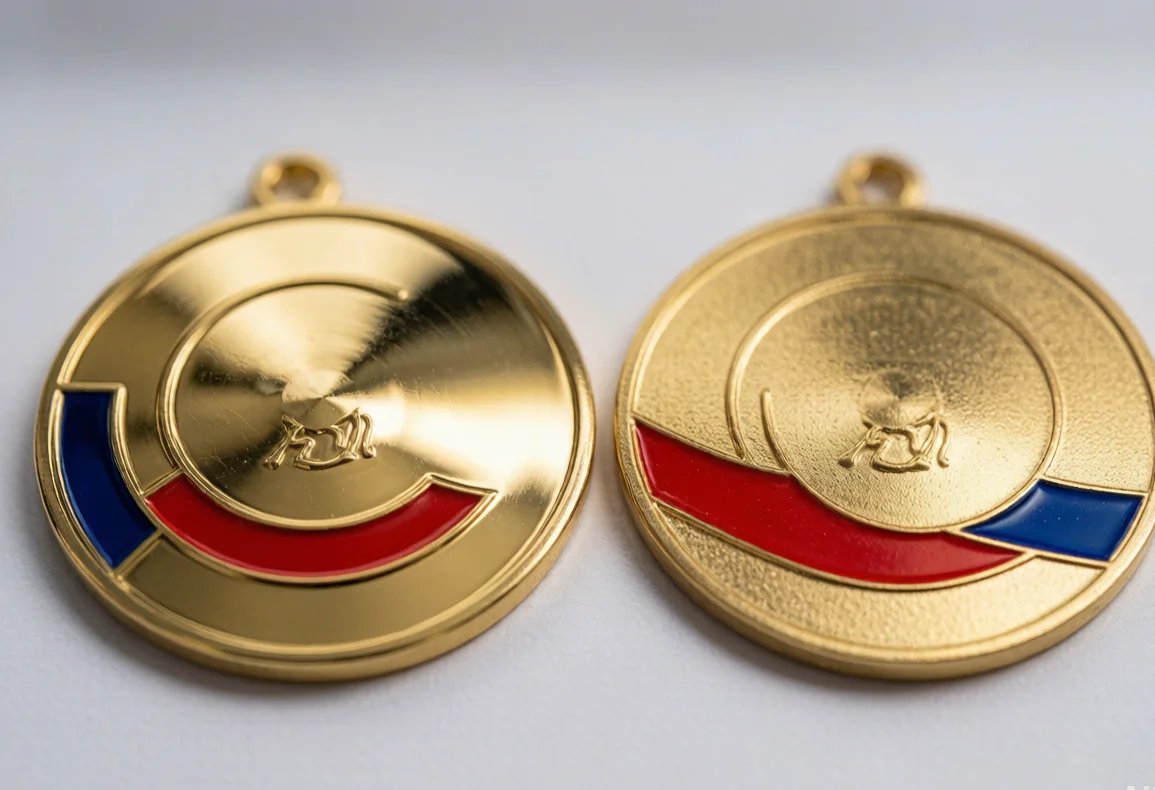
Brass and zinc alloy are both excellent materials for custom medals, and the best choice depends on your specific priorities.
Choose brass when perceived quality is paramount — championship medals, VIP awards, military decorations, and any piece meant to last a lifetime. The heavier weight, natural corrosion resistance, and superior plating characteristics justify the higher cost for awards that carry genuine prestige.
Choose zinc alloy when budget, design complexity, or production speed are the driving factors — participation medals, large-quantity orders, 3D sculpted designs, and events with tight deadlines. Modern zinc alloy manufacturing, when executed by a quality-focused factory, delivers medals that look and feel excellent at a significantly lower cost.
The most sophisticated approach is to use both materials strategically — brass for the awards that matter most and zinc alloy for everything else. A manufacturer capable of producing both materials gives you that flexibility within a single supplier relationship.
If you are evaluating materials for an upcoming custom medal order, you can reach out with your design specifications. Our engineering team can provide a side-by-side feasibility review and cost comparison for brass and zinc alloy versions of your design at no cost.