Are you tired of inconsistent prints and slow production?
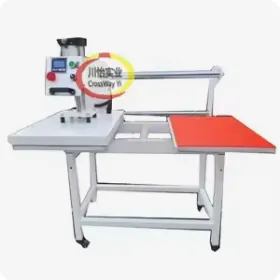
You run a business. You need speed. You need quality. But right now, maybe you are using a cheap iron or an old hand-press machine. It is frustrating. You press down hard, but the heat is not even. The logo is crooked. The vinyl peels off after two washes. You waste expensive T-shirts because the temperature was too high. Your workers get tired pressing the handle all day. This kills your profit. You need a machine that does the hard work for you. You need a machine that works the same way, every single time.Here is the truth. Printing on fabric or hard objects is not magic. It is science. It needs three things: Heat, Pressure, and Time. If one is wrong, the job fails. Our Pneumatic Auto Heat Press Machine controls all three for you. It uses smart computers to manage the temperature. It uses air power to give perfect pressure. It beeps when the job is done. No guessing. No mistakes. Just perfect prints on T-shirts, mouse pads, hats, and even metal signs. Let us look at how this machine solves your headaches.
How does this machine fix your quality problems?
The secret is in the “Smart Control” system. Old machines use a simple knob. You turn it, but you do not know the real temperature. Our machine uses a digital screen. You type in “180 degrees.” The machine heats up. When it hits 180, it stops heating. If it drops to 179, it turns on again. The difference is only plus or minus 0.5 degrees. This is very precise.The heating plate is special too. Inside, the wires are cast into the metal with a special material. This spreads the heat evenly. No hot spots. No cold corners. We also coat the plate with Teflon (like a non-stick pan). The transfer paper slides off easily. No sticky mess.Under the plate, there is a silicone pad. It can handle 350 degrees without melting. It is soft but strong. When the machine presses down, the pad pushes back up. This creates even pressure across the whole surface. This is why our prints look sharp and do not fade.
One machine, endless possibilities (Scenarios)
You might think this is just for T-shirts. It is not. This is a multi-purpose tool for your factory or workshop. Here is what you can do with it:##### Apparel and Fabric PrintingThis is the most common use. You can print on cotton, polyester, nylon, and blends.
- T-Shirts and Jerseys: Press vibrant logos for sports teams or brands. Use “Cold Peel” or “Hot Peel” vinyl sheets.
- Swimwear and Sportswear: These fabrics stretch. We use special high-elastic transfer paper. The print stretches with the fabric. It does not crack.
- Hats and Caps: You need a special curved hat attachment. The machine can handle the curve. The logo sits perfectly on the front panel.
- Tote Bags and Shoes: Print designs on canvas bags or shoe panels.
##### Small Items and Accessories
- Mouse Pads: This is a big market. You print the graphic on a transfer sheet. You place it on the rubber mouse pad base. The machine presses it. The heat bonds the ink to the rubber. It is fast. You can do hundreds a day.
- Labels and Tags (Mai Biao): Do not sew tags. Sewing is slow and scratches the neck. Use heat to press woven tags or printed labels onto the garment. It is clean, soft, and fast.
- Rhinestones and Sequins: This is where the “Pneumatic” part shines. You put a template with holes on the shirt. You fill it with rhinestones. The machine presses down hard. The glue on the back of the stone melts and sticks. It is much faster than picking stones by hand. The stones are all at the same level. They sparkle bright.
##### Hard Surfaces
- Ceramic Mugs and Plates: With a special mug holder (mug press), you can print photos on coffee mugs.
- Metal and Wood: Print awards, license plates, or decorative signs. The high pressure (up to 50 units) forces the ink into the surface coating.
- Mouse Pads (Hard Plastic): For the hard-top mouse pads, the machine presses the printed sheet onto the plastic base.
Technical Specs You Need to Know
We make different models. You can choose the one that fits your space and power. Here are the standard details:
- Power Supply: We have 110V for the USA/Japan and 220V for Europe/UK/Australia. Also 380V for big industrial units.
- Power Consumption: From 550 Watts (small desktop) up to 9000 Watts (large industrial).
- Temperature Range: 0 to 399°C (32 to 750°F). Most clothes need 120°C to 220°C. Mugs need 180°C to 220°C.
- Time Range: 0 to 999 seconds. Usually, T-shirts take 10-15 seconds. Mugs take 120-180 seconds.
- Pressure: Adjustable. For manual machines, you turn a knob. For pneumatic (air) machines, you set the air compressor (0.5 to 0.7 Mpa).
- Plate Size: We have small 15x15cm plates for logos. We have 40x50cm or 40x60cm for full T-shirt backs. We also have double stations (two plates) so you can prep one shirt while the other is pressing.
- Machine Weight: Small ones are 55kg. Big industrial ones are 150kg.
Specific Settings Guide (Cheat Sheet):
- Cotton: 180-220°C, time 25 seconds.
- Polyester: 180°C, time 15 seconds.
- Ceramic/Metal: 180-220°C, time 120-180 seconds.
- Rhinestones: 180°C, time 10-15 seconds (high pressure).
- Mouse Pad: 180°C, time 15 seconds.
Easy to Operate and Safe
You do not need a PhD to run this. The interface is simple.
- Turn on: Flip the switch. The screen lights up.
- Set: Press the “Up” arrow for temperature. Press the “Down” arrow for time.
- Wait: The machine heats up. When it beeps, it is ready.
- Work: Open the machine (or pull the handle). Put your T-shirt and paper down. Close it. The machine counts down.
- Finish: When the timer hits zero, the machine opens (or beeps). Take out the shirt. Peel off the paper. Done.
Safety First:
- Emergency Stop: There is a big red button. If something goes wrong, smash it. The machine stops instantly.
- Electric Shock Protection: We use good wiring and ground wires. The machine is safe to touch (except the hot plate!).
- Hand Protection: On manual models, the handle has a safety lock so it does not fall on your hands. On auto models, you usually need two hands to start the cycle so your hands are safe.
Maintenance is cheap:The heating element is strong. We use thick aluminum or cast iron. It does not warp. The Teflon coating lasts for years. If you scratch it, you can re-coat it. The only thing you might need to change is the silicone pad after 2 or 3 years of heavy use.
Why choose this over a cheap iron or manual press?
Let’s be real. A household iron costs $50. This machine costs more. But an iron cannot do 200 degrees evenly. An iron has no timer. An iron has no pressure gauge.
- Speed: An auto machine does a press in 10 seconds. A worker with an iron takes 30 seconds and gets tired.
- Consistency: The first shirt looks the same as the 500th shirt. No human error.
- Cost: You save money on wasted shirts. You save money on labor. One worker can run two machines at the same time.
- Look: The professional finish makes you look like a big brand. Customers pay more for quality.
We have seen factories switch from manual to pneumatic. Their output doubled. Their customer complaints about peeling logos dropped to zero.
Ready to upgrade your production line?
Do not let bad equipment slow you down. Whether you are a small startup printing 10 shirts a day, or a factory printing 1000 mouse pads an hour, we have the right model for you. We can customize the voltage, the plate size, and even the color of the machine.We are a factory-direct supplier. We know these machines inside out. We can send you a video of the machine running before you buy. We offer a warranty. We have spare parts in stock.Stop guessing. Start producing.Send us an inquiry today. Tell us what you want to print (T-shirts? Mugs? Mouse pads?). Tell us your voltage (110V or 220V?). We will send you the best price and a full catalog within 24 hours. Let’s make great products together.[GET A FREE QUOTE NOW]