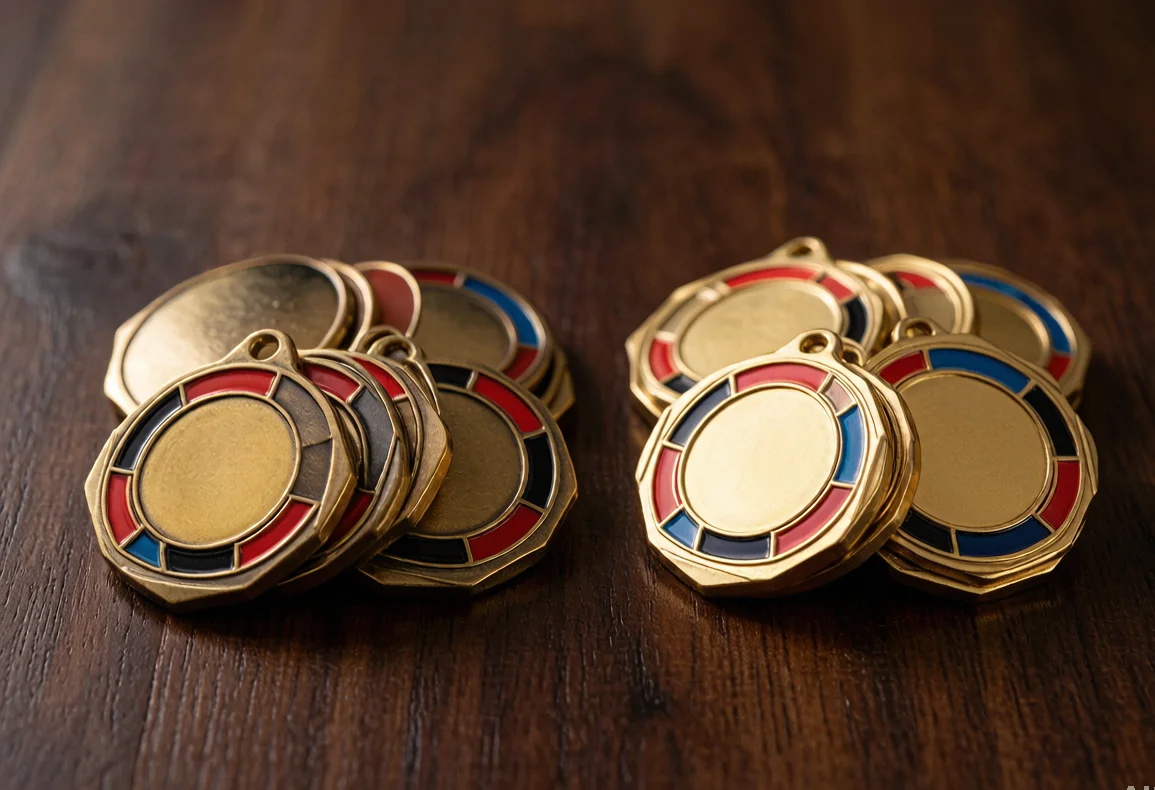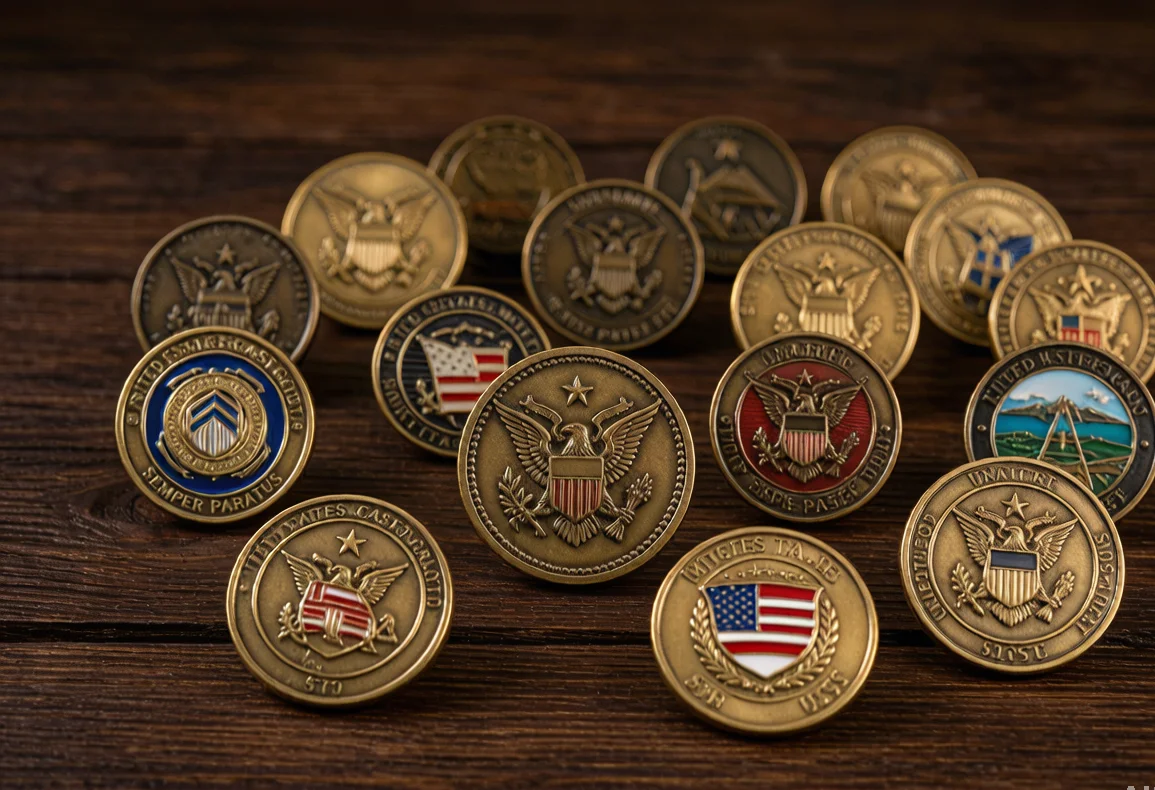
Challenge coins carry weight far beyond their physical dimensions. A well-crafted coin is a symbol of belonging, a mark of achievement, and a tangible reminder of shared experience. Whether you are outfitting a military battalion, recognizing law enforcement personnel, launching a corporate recognition program, or commemorating a government anniversary, the quality of your challenge coin speaks directly to the credibility of your organization.
For procurement officers and organizational leaders, navigating the world of custom coin manufacturing means balancing craftsmanship, budget, and timeline. A coin with faded enamel, soft edges, or uneven plating undermines the very purpose it is meant to serve — honoring the people who receive it.
This guide provides a thorough, practical framework for sourcing custom challenge coins, from understanding manufacturing methods to evaluating suppliers, so you can commission coins that your team will carry with pride for years to come.
The Tradition of Challenge Coins
Challenge coins trace their origins to military traditions dating back over a century. The most widely cited origin story involves a World War I pilot who carried a squadron medallion that ultimately saved his life when he was captured behind enemy lines. Since then, challenge coins have spread from military units to law enforcement agencies, fire departments, government offices, and corporate organizations worldwide.
Today, the “coin check” tradition — where members challenge each other to produce their unit coin — remains a living practice in military and first-responder communities. A coin produced with authenticity and quality honors this tradition; a cheaply made one does not.
Types of Challenge Coins
Understanding the main categories helps you specify requirements accurately.
Standard Military Coins — Unit insignia, typically 1.75–2 inches in diameter, 3–3.5mm thickness. Brass or zinc alloy base with enamel coloring. Quantity: 100–5,000 pieces per design. Traditional round shape with cutout edge variations available.
Commander’s Coins — High-value pieces personally carried by commanding officers to award outstanding performance. Larger size (2–2.5 inches), heavier weight, premium materials including brass and copper. Often feature 3D sculpted details and antique finishes.
Morale Coins — Informal, often humorous designs reflecting unit culture and inside references. Budget-friendly with simpler manufacturing requirements. Soft enamel with standard plating.
Corporate Recognition Coins — Awarded for milestones, anniversaries, and exceptional contributions. Clean, professional aesthetics with company branding. Soft or hard enamel with polished metal surfaces.
Government Commemorative Coins — Anniversary pieces, dignitary gifts, or event souvenirs. Highest attention to detail, often with dual plating and multi-layer designs. Larger budgets and longer lead times.
Manufacturing Methods
The manufacturing method determines the level of detail, texture, and overall feel of the coin.
Die Struck
Die struck coins are produced by striking a solid metal blank between two hardened steel dies under extreme pressure. This process compresses the metal, creating sharp, crisp details similar to currency coins.
- Highest detail reproduction — fine lines, small text, and intricate patterns are rendered clearly
- Smooth, flat background — ideal for highly polished or mirrored finishes
- Material options: brass, copper, iron, zinc alloy
- Best for: high-end military coins, commander’s coins, government pieces
Die Cast
Molten zinc alloy is injected into a steel mold under pressure. This method allows for three-dimensional relief and variable edge thickness.
- 3D sculpted details — raised and recessed areas at multiple levels
- Cost-effective for medium to large quantities
- Faster production than die striking
- Best for: standard unit coins, morale coins, corporate coins
3D Mold (Sculpted Coins)
Advanced CNC engraving creates a mold with dimensional depth — elements at the foreground stand proud while background details recede. This produces a coin-like miniature sculpture.
- Maximum visual impact — coin-like sculpted contours
- Best for: commander’s coins, special edition pieces
- Mold cost: 20–40% higher than standard molds
Material Selection
| Material | Weight | Detail Quality | Relative Cost | Best For |
|---|---|---|---|---|
| Brass | Heavy | Excellent | Higher | Commander’s coins, premium pieces |
| Zinc Alloy | Medium | Very Good | Standard | Standard unit coins, corporate coins |
| Copper | Heavy | Excellent | Higher | Antique-finish commemorative coins |
| Iron | Heavy | Good | Lower | Budget-conscious orders |
Brass is the traditional choice for military challenge coins. It carries a satisfying weight and develops a natural patina over time admired by coin collectors.
Zinc alloy (Zamak) offers an excellent balance of detail quality and cost. A 2-inch zinc alloy coin weighs approximately 35–40g, providing enough heft to feel substantial without excessive shipping costs.
Copper delivers a warm, traditional appearance, especially when paired with antique finishing, making it ideal for commemorative pieces.
Enamel and Color Options

Soft Enamel — Colored enamel is applied into recessed metal areas and baked. The metal ridges remain slightly raised above the enamel, creating a textured surface you can feel. This is the most common choice for military and organizational coins, offering vibrant colors with a tactile finish.
Hard Enamel (Cloisonné) — Multiple layers of enamel are applied and baked, then the surface is stone-polished completely flat. The result is a smooth, jewelry-like finish with superb durability. Adds 3–5 production days and approximately 20–40% to unit cost.
Imitation Hard Enamel — Soft enamel topped with a clear epoxy coating polished flat. Achieves the smooth look of hard enamel at a lower cost and faster turnaround. Popular for corporate coins where budget and speed are priorities.
No Color (Die Struck Only) — The metal surface itself carries the design through raised and recessed areas, polished to highlight contrast between shiny and matte surfaces. Classic and timeless, ideal for formal presentation pieces.
Plating and Finishes
| Finish | Appearance | Best For |
|---|---|---|
| Polished Gold | Bright, reflective gold | Commander’s coins, awards |
| Antique Gold | Muted gold with darkened recesses | Traditional military coins |
| Polished Silver | Bright silver mirror | Corporate, law enforcement |
| Antique Silver | Weathered silver effect | Historical unit coins |
| Antique Copper | Rich brown with warm tones | Commemorative pieces |
| Nickel | Cool grey, highly durable | Budget-friendly orders |
| Black Nickel | Dark gunmetal finish | Tactical, special forces coins |
| Dual Plating | Two finishes combined | High-end presentation coins |
Antique finishes are perennially popular for military coins because the darkened recesses enhance detail visibility and give the coin a distinguished, timeworn character that resonates with tradition.
Edge Options
- Plain edge — Clean and classic
- Reeded edge — Grooved like a traditional coin
- Rope edge — Braided pattern for nautical or historical themes
- Cross-cut edge — Diamond pattern for visual interest
- Custom cutout edge — Shape the coin outline to match the design (badge shape, state outline, etc.)
Cutout or shaped edges require custom die tooling, adding approximately 10–15% to mold cost but dramatically increasing the coin’s uniqueness.
Design Specifications
Providing manufacturers with proper artwork is essential for achieving the intended result.
Vector files only — Adobe Illustrator (.ai), CorelDRAW (.cdr), or EPS format. Raster images (JPEG, PNG) cannot be used for die or mold creation because they lack the scalable precision required.
Pantone color codes — Specify exact Pantone numbers for each enamel color. Without this, color matching relies on the manufacturer’s interpretation, leading to variations.
Metal vs. enamel zones — Clearly delineate which areas should show bare metal (plated) and which should receive enamel coloring. This is typically done with a black-and-white separation layer in the artwork.
Text legibility — Small text below 6pt risks filling with enamel and becoming illegible. Keep critical text at 8pt or larger. The manufacturer’s pre-production artwork review will flag legibility concerns.
3D vs. 2D levels — For dimensional coins, specify the relative height of each design element. The mold engraver uses this layer map to program the CNC toolpath.
Add-Ons and Presentation
Edge numbering — Sequential numbers engraved on the coin edge, turning each piece into a uniquely traceable collectible. Common for limited edition coins.
Epoxy coating — A clear protective dome applied to one or both faces. Protects against scratching and handling wear while adding a glossy finish.
Display cases and stands — Velvet-lined presentation boxes, acrylic stands, and wooden display cases elevate the presentation value significantly. Most appropriate for commander’s coins and award pieces.
Custom packaging — Branded boxes, pouches, or presentation folders with organizational logos. Minimum quantities typically start at 500 units for custom packaging.
Quality Control Standards
Professional manufacturers should provide documentation at three inspection stages:
Pre-production — Artwork proof review showing exact dimensions, color placement, and metal/enamel zones. This is the most important QC step — errors caught here cost nothing to fix.
In-process — First article inspection after mold completion. Verify weight, dimensions, plating quality, and enamel registration before mass production begins.
Final inspection (AQL) — Random sampling per ANSI/ASQ Z1.4 with AQL 2.5 level covering: dimensional accuracy, plating uniformity, enamel fill quality (no air bubbles, cracks, or overflow), color matching to Pantone specifications, edge finishing, and packaging integrity.
Production Timeline
| Stage | Duration |
|---|---|
| Artwork review and mold design | 3–5 days |
| Mold production (CNC) | 5–7 days |
| Sample production and approval | 3–5 days |
| Mass production (1,000 pieces) | 10–12 days |
| Quality inspection | 2–3 days |
| Edge numbering (if applicable) | 1–2 days |
| Packaging | 2–3 days |
| Air freight | 5–7 days |
| Total lead time | 31–44 days |
Rush production can compress this to 18–22 days with a 15–25% surcharge.
Pricing Factors
| Factor | Cost Impact |
|---|---|
| Material (brass vs. zinc vs. iron) | 25–50% variance |
| Size (1.75” vs. 2.25”) | 20–35% increase |
| Thickness (3mm vs. 5mm) | 10–20% increase |
| Number of enamel colors | Additional labor per color |
| Enamel type (soft vs. hard) | 20–40% for hard enamel |
| Plating type | 10–40% variance |
| Edge design (standard vs. cutout) | 10–15% for custom edges |
| 3D sculpted mold | 20–40% mold surcharge |
| Order quantity | Significant volume discounts |
| Packaging type | 15–30% variance |
As a general benchmark, a standard 2-inch zinc alloy coin with soft enamel, 4–5 colors, gold plating, and an order quantity of 500 pieces ranges from $1.50–$4.00 per unit including mold amortization.
Supplier Evaluation Checklist
Technical capability — Request photos of production equipment: die striking presses or die casting machines, CNC engraving stations, electroplating lines, and quality inspection areas. A manufacturer who cannot show their production floor is a red flag.
Material sourcing — Ask where base metals originate and whether alloy composition certificates are available. Reputable manufacturers can provide mill certificates for brass and zinc alloy.
Certifications — ISO 9001 for quality management systems. REACH and RoHS compliance for orders destined for European markets. Third-party audit reports (SGS, Bureau Veritas, Intertek) add verification.
Sample evaluation — Order pre-production samples before committing to full production. Evaluate: weight and heft, plating uniformity under good lighting, enamel fill (no pinholes, bubbles, or color bleed across metal boundaries), edge finish smoothness, clarity of fine text and details, and overall visual impact when held at arm’s length.
Communication — Response time, quality of English communication, willingness to provide production updates with photos, and clarity in addressing technical questions are all indicators of a reliable manufacturing partner.
Common Procurement Mistakes
Skipping the sample phase. A digital artwork proof does not convey weight, plating quality, or the tactile experience of a finished coin. Always budget for a pre-production sample. Sample cost: $30–50 including courier delivery. This is the single most important safeguard in the entire procurement process.
Providing incorrect artwork. Submitting JPEG or PNG files when the manufacturer requires vector artwork delays the project from day one. Confirm file format requirements before engaging suppliers.
Underestimating lead time. Many first-time buyers plan for 30 days and receive their coins in 45. Always add buffer: artwork revisions (3–5 days), sample shipping and approval (5–7 days), and customs clearance (3–5 days). A 45-day plan is safer than a 30-day plan.
Prioritizing unit price over total cost. A quotation with a lower per-unit price often hides a higher mold fee, excludes packaging, or uses cheaper materials that compromise quality. Request itemized quotations showing mold cost, unit production cost, packaging cost, and shipping separately.
Neglecting import compliance. Challenge coins shipped internationally may be subject to customs duties and material content regulations. Brass and zinc alloy coins are generally tariff-free in most jurisdictions, but verify specific HS codes with your logistics provider.
Step-by-Step Ordering Process
- Design finalization — Vector artwork with Pantone colors and metal/enamel layer separation
- Supplier outreach — Contact 3–5 manufacturers with identical specifications for comparable quotations
- Quotation comparison — Itemized costs: mold, production, packaging, shipping
- Sample order — Pre-production samples from shortlisted 2–3 suppliers
- Sample evaluation — Weight, plating, enamel, edge quality, and overall presence
- Production order — Written agreement covering specifications, timeline, QC checkpoints, and payment terms
- In-process updates — Request photos at mold completion and first article stages
- Final QC report — AQL inspection report with photographs before balance payment
- Packaging and shipping — Confirm packaging method, carton labeling, and tracking details
FAQ
What is the minimum order quantity for custom challenge coins?
Most manufacturers require 100–300 pieces per design. Some accept 50–100 pieces with a mold surcharge. Below 50 pieces, unit costs increase significantly as the mold cost is amortized over fewer units.
How much do custom challenge coins cost?
A 2-inch zinc alloy coin with soft enamel, 4–5 colors, and gold plating ranges from $1.50–$4.00 per piece at 500+ quantities. Brass costs 25–50% more. Mold fees range from $150–$400 per design.
How long does production take?
Standard timeline: 4–6 weeks from artwork approval to delivery. Breakdown: mold (5–7 days), sample (3–5 days), production (10–12 days for 1,000 pieces), inspection (2–3 days), packaging (2–3 days), shipping (5–7 days).
What file format should I provide for the design?
Vector files only: Adobe Illustrator (.ai), CorelDRAW (.cdr), or EPS. Specify Pantone color codes. Provide a black-and-white separation layer marking metal areas and enamel areas.
Can I get a sample before placing a bulk order?
Yes, and you should. Most manufacturers provide pre-production samples for $30–50 including courier delivery. The sample allows you to verify weight, plating quality, enamel fill, and overall workmanship before committing to production quantities.
What is the difference between soft enamel and hard enamel?
Soft enamel: slightly textured surface where metal ridges rise above the colored enamel areas. More affordable, faster production. Hard enamel: completely flat, jewelry-smooth surface achieved through multiple filling and polishing cycles. Premium appearance, higher cost, 3–5 extra days.
Do challenge coins come with edge numbering?
Edge numbering is an optional add-on. Sequential numbers are engraved on the coin edge, making each piece individually traceable. This is popular for limited edition or numbered series coins. Adds 1–2 production days and approximately $0.15–$0.30 per piece.
Can I order challenge coins in custom shapes?
Yes. Custom-shaped coins (badge outlines, state maps, unit mascots) require a custom die, adding approximately 10–15% to mold cost. The manufacturer will review your design for manufacturability, as extremely thin or protruding elements may be structurally fragile.
Conclusion
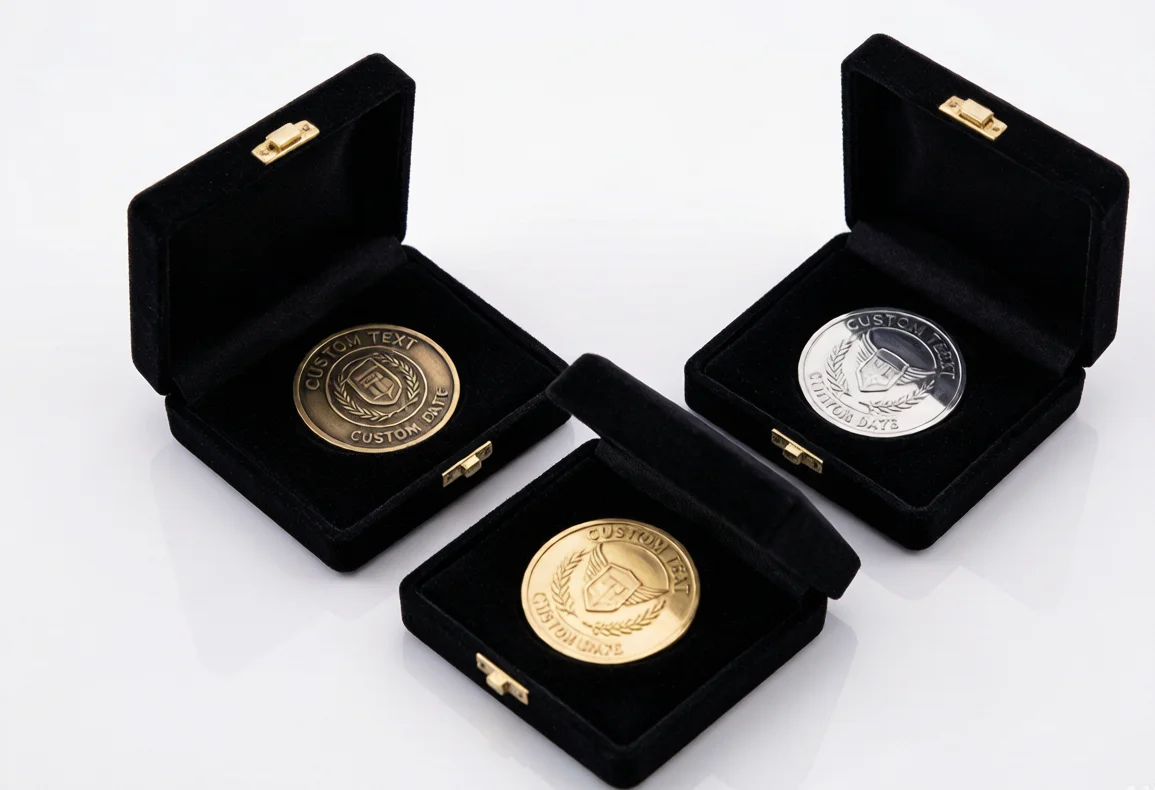
A challenge coin is far more than a metal disc with colored enamel. It represents identity, recognition, and membership in something larger than oneself. The quality of the coin reflects the quality of the organization that commissions it.
Selecting the right manufacturing partner requires attention to technical details — material composition, enamel process, plating quality, and dimensional accuracy — balanced with practical considerations of budget, timeline, and communication.
If you are sourcing custom challenge coins for your unit, department, or organization, you can reach out with your design concept or artwork files. Our engineering team can provide a feasibility review, material recommendations, and a production timeline estimate at no cost.